
NorQuim submitted to the Environmental Impact Assessment System (SEIA) the first of two Environmental Impact Studies for the plants that comprise the NorQuim Technological Complex project in Mejillones, Antofagasta Region.
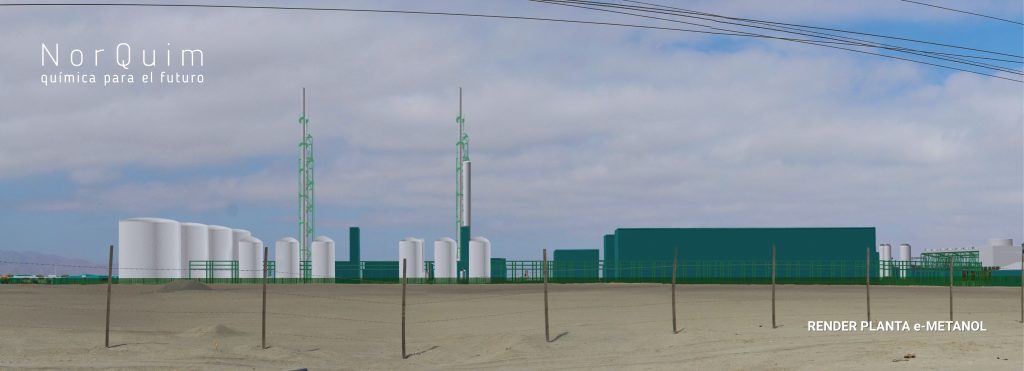
The Complex comprises two complementary but independent plants: a Strategic Supplies Plant for lithium and copper mining and an e-Methanol Plant.
Given this configuration — a Complex comprising two plants — the environmental assessment process is structured in two stages. On March 27, the Environmental Impact Study (EIA) for the e-Methanol Plant was submitted, while the EIA for the Strategic Supplies Plant is expected to be submitted in mid-April.
The Strategic Supplies Plant involves an investment of US$900 million and will produce soda ash, calcium chloride, high-purity lime, and other key supplies for sustainable lithium and copper mining. These products are currently imported, so local production will help reduce the carbon footprint associated with transportation and strengthen security of supply for industries that are important to the Chilean economy.
The e-Methanol Plant involves an investment of US$1.2 billion and will produce a low-carbon fuel with significant potential in the international shipping and aviation sectors.
The NorQuim Technological Complex was designed under circular economy principles: it will use residues from mining processes as raw materials and, in the production of e-Methanol, will use biogenic CO₂ captured at the Strategic Supplies Plant.
Overall, the project will require an investment of US$2.1 billion.
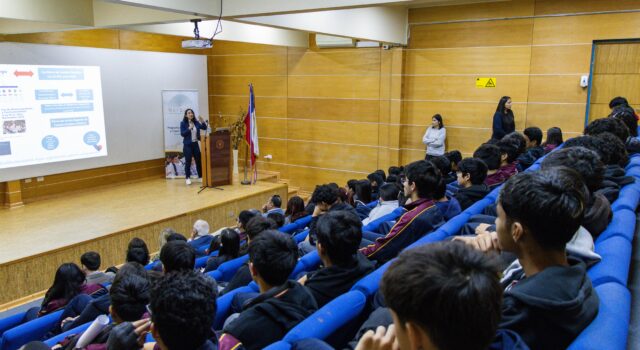
According to the projected schedule, following successful completion of the environmental assessment process, construction would begin in 2028, with operations starting in 2030. The construction phase is expected to generate up to 3,200 jobs, while approximately 400 direct and indirect jobs are expected during operation. To help workers from Mejillones gain access to permanent positions, the project is implementing an Education and Skills Development Program (PEC, Spanish acronym) to develop a skilled local workforce for the new technologies contemplated by the project.
Once the Technological Complex reaches full operation around 2035, it will produce 520,000 tonnes of soda ash, 520,000 tonnes of calcium chloride, 200,000 tonnes of lime, and 420,000 tonnes of e-Methanol annually.